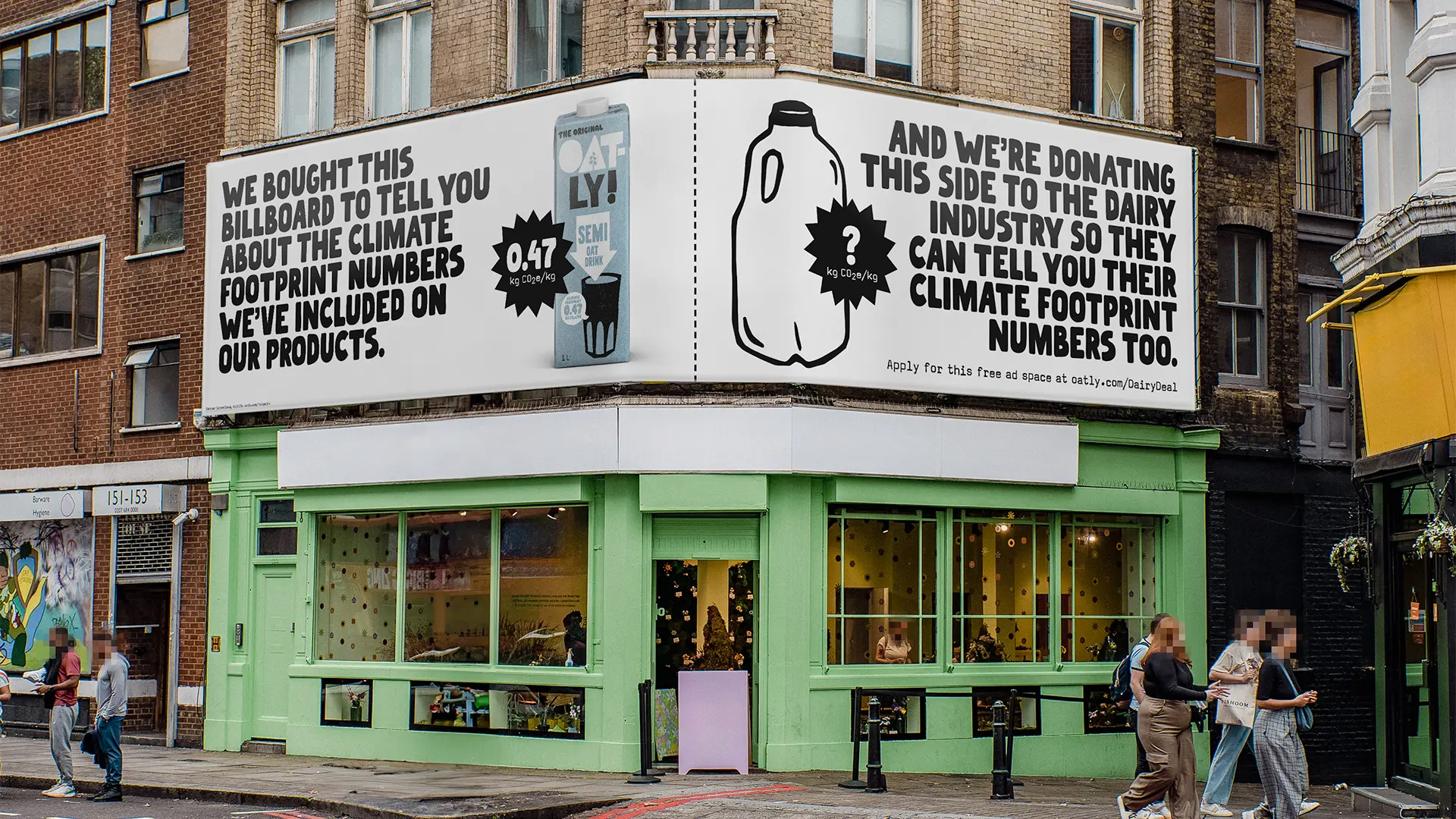

Oatly: How humour and tone of voice became the strongest brand strategy
Oatly: How humour and tone of voice became the strongest brand strategy

Oatly is not oat milk. Oatly is a statement.

Oatly does not sell a product. Oatly sells an attitude.
And this is not marketing speak, but a strategic decision.

While many food brands rely on Health Claims, and soft-pedalled promises of sustainability, Oatly does something completely different:
The brand speaks. And in the way that brands actually should not speak.

This is particularly evident in social media marketing. Here you can see how Brand Strategy becomes a living language. Humour is not a nice extra, but brand-defining element. Oatly uses language as a tool to reduce distance, generate attention and create cultural relevance.

Or to put it another way: Oatly doesn't want to please. Oatly wants to resonate.

Brand Strategy: The conscious decision in favour of the Challenger role

Every strong brand voice begins with a clear strategic stance. At Oatly, this is: We are the disruptive factor.

The brand strategy is based on a few basic assumptions that are implemented extremely consistently:

  • The market is full of interchangeable messages
  • People have had enough of slick brands
  • Sustainability needs honesty, not a glossy façade

Oatly deliberately positions itself as a Challenger Brand. That means:

  • Do not adapt, but question.
  • Not to explain, but to comment.
  • Don't try to convince, but allow discussion.

This strategy is directly reflected in social media marketing. Oatly does not communicate about the community, but with her. Comments are allowed to contradict. Campaigns can be offensive. Posts can be absurd.

The result: a brand with clear edge, which not everyone likes – but which remains relevant for precisely this reason.

Tone of Voice: Cheeky, self-deprecating, human – and maximally conscious

Oatly's Tone of Voice seems spontaneous. But it is not.
It is highly strategic.

The language follows clear principles:

  • Everyday language instead of marketing language
  • Irony instead of instruction
  • Personality instead of perfection

Oatly writes the way people think. Disorganised. Honest. Sometimes slightly annoyed. Sometimes overly reflective. Often with a humorous twist that breaks expectations.

Important: Humour is never just for entertainment. It is Signal transmitter.
He says: We don't take ourselves more seriously than the cause. 
And that is precisely what makes the brand credible.

In the social media context, this language ensures high Shareability, strong community loyalty and recognisability – even without a logo.

Humour as a brand tool – not as a gag

Many brands „do humour“. Oatly is humorous.
That is a big difference.

Humour at Oatly fulfils several functions at the same time:

  • It lowers the entry barrier to complex topics such as sustainability
  • It makes attitude accessible without appearing moralistic
  • It creates emotional closeness

The humour is often deliberately unwieldy. Texts are long. Statements seem almost too honest. Some messages read like internal thoughts made public by –.

That creates irritation.
And irritation generates attention.

Humour is therefore not an end in itself, but part of the communicative brand architecture. It helps to ensure that Oatly is not only seen, but also remembered.

Social media as an extension of the brand identity

Oatly does not use social media as a sales channel, but as a cultural platform.
Every post follows the same logic as packaging, OOH or website:

  • same language
  • same attitude
  • The same desire to break the rules

This also means:
No trending hashtags without meaning.
No copy-paste CTAs.
No empty sustainability claims.

Instead, content is created that feels like commentary on the zeitgeist. Social media becomes a stage for brand personality – not a discount wall.

This is a key realisation for sustainable brands:
Consistency beats volume.
And attitude beats reach.

„Your brand is what people say about you when you're not in the room.“

Jeff Bezos | US-American entrepreneur and investor

Oatly ensures this in a very targeted way, what – is said through language, tone of voice and the courage to be uncomfortable.

Why Oatly is a blueprint for value-orientated brands

Oatly impressively demonstrates that good social media marketing is not about tools, but about Decisions exists. Decisions in favour of attitude. For language. For personality.

The brand proves it:
Humour can be deep.
Sustainability can be loud.
Branding can be uncomfortable.

There is a clear lesson here for sustainable, animal-friendly and value-orientated companies:
A strong Brand Strategy needs an equally strong Tone of Voice. And this may sound – no, – should sound different from everything else in the feed.

You don't want an interchangeable brand voice, but a language with attitude?

With 2bu design we develop Brand strategy, branding and tone of voice not from trends, but from depth. We work with the Archetypes according to C. G. Jung and translate them into contemporary brand attitudes – as with Oatly, where the Challenger from the mixture of Rebel and hero is created.

Let's find out together how your brand can speak.

Pilar Font – Art deco typography for strong brand identities
Pilar Font – Art deco typography for strong brand identities

Art deco, but contemporary please

Art deco is one of those things. It's easy to slip into gold frames, Gatsby kitsch and overambitious nostalgia. Pilardoes it differently. The scripture takes the Formal rigour and geometry of European Art Deco, but leaves out everything superfluous.

Pilar was originally created in 2012 for the headlines of the magazine Bol'shoy Gorod (Big City). No coincidence. Editorial environments are mercilessly honest. Either a typeface carries – content or it fails. Pilar has passed and has been further developed.

The result is a geometric grotesque, that appears stable, but not rigid. Clearly constructed, but not cold. Ideal for brands that Attitude, intellect and aesthetics want to connect. Especially in the Branding, in Editorial Designs or on Websites, that want to say more than „we're here too“.

This is exciting for sustainable and value-orientated brands. Pilar doesn't shout. It stands. And that is often the louder statement.

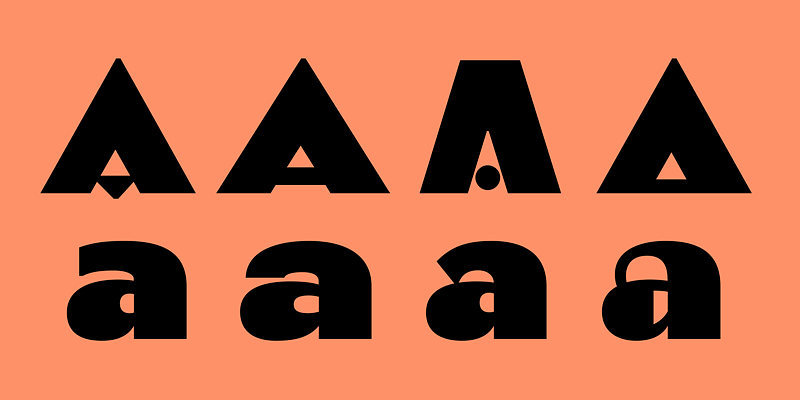
Four stylistic movements – one system, many voices

Now it's getting typographically nerdy. And that's a good thing.

Pilar has four stylistic movements, each with its own alphanumeric glyphs. This means that each letter exists in several variants. These are not gimmicks, but real design options.

The four sets are called:

  • Regularly open

  • Wide closed

  • Narrow

  • Game

The highlight: you can vary within a word or sentence without breaking the visual system. Headlines become dynamic. Logos look customised. Campaigns remain consistent, but not monotonous.

Especially in the Brand design this is worth its weight in gold. A font that adapts without losing its identity saves time, discussions – and ultimately resources. Sustainability sometimes simply starts with good decisions.

For us as a branding agency, this means fewer compromises between aesthetics and function. More room for manoeuvre for real concepts.

Who is behind it?

Behind Pilar stands CSTM Fonts, founded in 2014 by Ilya Ruderman and Yury Ostromentsky. Both do not come from the „we also make fonts“ corner, but from a deep typographic practice.

Both have participated in the Moscow State University of Print studied graphic design. Ilya Ruderman later completed the renowned Master Type & Media at the Royal Academy of Art in The Hague. He has been a tutor, art director and type designer for international foundries and has worked on Neutraface, Graphic and Lava collaborated.

Yury Ostromentsky was for a long time Art Director of BigCity Magazine. Pilar is based on his personal typeface, which was used there. So: real application, real requirements, real feedback.

Her work has received several awards, including Granshan, Modern Cyrillic and the European Design Award. In short: this is not a trend font. This is substance.

Why we love Pilar

Because Pilar shows attitude, without being loud.
Because they Complex brand appearances instead of dominating them.
And because it proves that good typography doesn't need to be explained – it simply works.

For Sustainable, ethical and vegan businesses Pilar is particularly exciting. She comes across as reflective, mature and clear. No gimmickry. No eco-clichés. But design with ambition.

Exactly our thing.

Why we love Pilar

Because Pilar shows attitude, without being loud.
Because they Complex brand appearances instead of dominating them.
And because it proves that good typography doesn't need to be explained – it simply works.

For Sustainable, ethical and vegan businesses Pilar is particularly exciting. She comes across as reflective, mature and clear. No gimmickry. No eco-clichés. But design with ambition.

Exactly our thing.

Du willst wissen, ob Pilar zu deiner Marke passt?

Oder suchst eine Schrift, die deine Brand strategy, dein Corporate Design und deine Communication wirklich trägt?

Dann lass uns drüber sprechen. Wir denken Typografie nicht isoliert, sondern als Teil eines sinnvollen Gesamtsystems. Für Marken mit Haltung. Und Rückgrat.

Forager Font - Expressive display font for bold branding with attitude

Forager Font - Expressive display font for bold branding with attitude

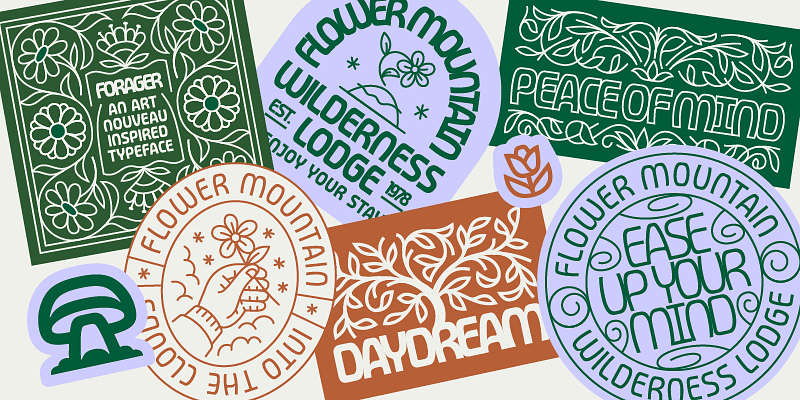
Forager: When typography starts to breathe

Forager is one of those typefaces where you immediately realise that nobody wanted to design „just another sans serif“.
This was about attitude. About rhythm. About visual friction.

The font unites three very different worlds:

  • the psychedelic opulence of the 70s,

  • the organic lines of Art Nouveau,

  • and the Reduction of modern grotesque fonts (sans serif fonts without small closing strokes).

That sounds like chaos. But it's not.
Forager balances these influences with surprising precision.

Overlapping as a design principle

The centrepiece of Forager is its Overlap. Letters share space, intersect, interlock. Normally a nightmare for legibility. Not here.

The trick lies in the design:
curved verticals meet Flat horizontal lines. This creates a rounded, slightly angular design language that makes overlapping clearly recognisable. The eye can separate the letters even though they are touching. Typographically clever. Almost cheeky.

The font family includes Five line widths, each in:

  • overlapping variants for maximum effect

  • and closely running versions for more controlled layouts

This makes Forager amazingly versatile – from bold branding and editorial headlines to experimental social media visuals.

Who is behind it?

Forager was designed by Jacob Cummings, published via Overlap Type – is still a young, but all the more exciting typo label under the direction of Kel Troughton.

Overlap Type started in 2023 with a radical rule: Only fonts with overlapping letterforms.

What began as a self-imposed restriction quickly became a creative playing field. Today, Overlap Type goes beyond pure overlap, but remains true to its mission: question conventional rules in font design.

And that's exactly what you can feel in Forager.
This writing does not aim to please. It wants to work.

Why we love Forager

Forager is the perfect fit for brands that don't want to be slick. For sustainable businesses, cultural projects, vegan labels or magazines with high standards.

She says:
We think differently.
We dare to do something.
And we mean it.

Typografie ist Kommunikation. Forager spricht laut – aber nicht beliebig.

Additional licence options –, for example for apps or enterprise use –, can be found on www.overlaptype.com.

Du willst wissen, ob Forager zu deiner Marke passt?

Oder suchst eine Schrift, die deine Brand strategy, dein Corporate Design und deine Communication wirklich trägt?

Dann lass uns drüber sprechen. Wir denken Typografie nicht isoliert, sondern als Teil eines sinnvollen Gesamtsystems. Für Marken mit Haltung. Und Rückgrat.

Call-to-actions in social media - how sustainable brands get people to take action

Call-to-actions in social media - how sustainable brands get people to take action

Why call-to-actions are more than marketing

Social media is not a monologue. It is a dialogue with interruptions, distractions and very short attention spans.
A CTA sets a point here. Or rather: an arrow pointing forwards.

A good Call-to-action does not say „buy now“, but:
„If you're interested, here it goes.“

Sustainable brands in particular are often hesitant. Too loud? Too promotional? Too pushy?
But the opposite is the case: no CTA often seems arbitrary and unclear.

CTAs help:

  • Provide orientation

  • Start conversations

  • Build reach organically

  • Deepening relationships

Or to put it more simply: if you share something, you can also say it, Why.

Why many CTAs do not work

Most bad CTAs are not meant to be bad. They are simply imprecise.

Typical stumbling blocks:

  • Very general requests without benefit

  • several CTAs in one post (overload sends its regards)

  • always the same CTA, no matter what it's about

  • CTAs that only benefit the company

A CTA only works if it matches the content of the post.
A knowledge post needs something different than a personal insight or an offer post.

Sustainable communication does not mean sacrificing clarity.
On the contrary.

These types of call-to-actions work particularly well

CTAs have different tasks. Those who understand this automatically write better ones.

Interaction CTAs

They invite opinion. Not for approval.

Examples:

  • „What do you think?“

  • „Which point is relevant for you right now?“

  • „How do you deal with it?“

These CTAs are quiet but effective. They create proximity and movement.

Value-added and educational CTAs

Ideal for explanatory content, guides or posture topics.

Examples:

  • „Save this post for later“

  • „Swipe for the summary“

  • „Read on if you want to understand sustainable marketing more deeply“

The CTA reinforces the benefit of the content here.

Relationship CTAs

They say: You are welcome here.

Examples:

  • „Follow us for honest marketing with attitude“

  • „Write us a DM if you are interested in the topic“

  • „If you find yourself here, feel free to stay“

These CTAs are essential for small, value-based brands in particular.

Offer CTAs

Yes, selling is allowed. Transparency makes the difference.

Examples:

  • „You can find out more about how we work here“

  • „How we support sustainable brands in branding“

  • „See if a collaboration is right for you“

No pressure. A clear invitation.

How CTAs don't sound like marketing

The tone decides.
Good CTAs feel like the logical last sentence of a post.

Helpful guidelines:

  • one CTA per post

  • actively, but calmly formulated

  • concrete instead of vague

  • honest instead of clever

A simple reality check:
Would you say this sentence in a real conversation?
If not, your community will also notice.

A fitting thought from Simon Sinek:

„People don't buy what you do; they buy why you do it.“

Simon Sinek

A CTA without an attitude falls flat. One with attitude works – even without an exclamation mark.

CTAs as part of your brand voice

Call-to-actions are not an appendage. They are part of your Brand Voice.
They should convey the same values as your design, your language and your offers.

For sustainable brands, this means

  • Less pressure, more invitation

  • Less tactics, more clarity

  • less volume, more substance

With 2bu design we always think about CTAs strategically. Not in isolation, but embedded in branding, content strategy and long-term visibility. Because a single post rarely works. A coherent system does.

Strong call-to-actions are not marketing tricks

They are a service. They help your community to understand:

  • Why your content is relevant

  • what you can do with it

  • how they connect with you

Sustainable brands in particular can learn, clearly visible to be – without losing their values.

CTAs are not a contradiction to mindfulness.
They are structure in a noisy world.

Du willst CTAs, die zu deiner Marke passen und sich nicht nach Marketing anfühlen?

Wenn du möchtest, können wir als nächsten Schritt:

  • concrete Instagram CTAs for your content formats develop

  • one 2bu-typical CTA library Build

  • or Integrate CTAs directly into existing posts and sharpen

Lass uns gemeinsam schauen, wie Sustainable branding and social media interact meaningfully for your business.

    Understanding website hosting: Which solution suits you and your budget
    Understanding website hosting: Which solution suits you and your budget

    1. large hosting providers: convenient, cheap – but not always smart

    Large hosting providers such as Strato, IONOS, All-Inkl or Hetzner are the first point of contact with websites for many people. Getting started is easy, the Prices from 5–10 € seem attractive and the promises are big: lots of memory, high availability, 24/7 support. This can be perfectly adequate for small projects or landing pages. It usually only becomes problematic when websites grow or become more customised.

    The biggest advantage lies in the Standardisation. These providers operate huge server structures on which thousands of websites run in parallel. This reduces costs – but also flexibility. Updates, server configurations or PHP versions are often predefined. For WordPress sites with Divi, WooCommerce or customised plugins, this can quickly lead to Performance losses or incompatibilities lead.

    Another point: Not all support is the same. There are hotlines, but rarely a fixed contact person. The people at the other end don't know your website and you don't understand the language. If something is broken, you usually have to hire a developer. Monitoring, security checks or SEO-relevant performance optimisation are not included in the scope of services.

    Advantages of large providers

    • Favourable entry
    • Simple set-up
    • Good basis for small, static websites

    Disadvantages

    • You have to buy your URL yourself
    • Emails are not set up for you
    • Shared server → fluctuating performance
    • No view of your specific website
    • Maintenance, updates and security remain with you

    2. developer hosting: when technology becomes part of the strategy

    When hosting via a Developer or an agency your website is not just „somewhere“, but deliberately in a supervised environment for 10–25 €. The server is customised to your system: WordPress version, Divi theme, plugins, PHP settings and caching all mesh together perfectly. This has a direct effect on Loading time, stability and SEO from.

    The decisive difference: Your developer knows your website. He or she knows which plugins are critical, which updates should be tested and where potential vulnerabilities lie. Instead of only reacting when something breaks, the system is regularly checked, updated and optimised. This reduces downtime, security vulnerabilities and stress.

    This is a real advantage, especially for entrepreneurs who are not particularly tech-savvy or brands with sensitive content, e.g. from coaches and therapists. Your website is not only online – it is supervised & safe. And usually for surprisingly little money, because many developers use shared servers or optimised setups.

    Typical services for developer hosting

    • URL is purchased in your name
    • Emails are set up for you
    • Regular updates (core, theme, plugins)
    • Safety monitoring
    • Performance checks
    • Backups & recovery
    • Technical contact who knows your setup

    3. monthly website maintenance: small hours, big impact

    Many developers also offer Maintenance or care packages on. They usually contain 1–2 hours per month for simple work included. Sounds small, but is strategically extremely valuable. Because this time can be used flexibly: small text adjustments, image changes or SEO fine-tuning. The Costs for this are €25 upwards

    The great advantage lies in the Plannability for both sides. You don't have to request, explain and wait for a new quote every time. Your developer has reserved time for you – and can react if something comes up at short notice. This is worth its weight in gold, especially for the self-employed and NGOs, where campaigns often arise spontaneously.

    In addition, the inhibition threshold for optimising things decreases. Instead of „It's not worth it now“, a continuous improvement process is created. And this is precisely what is crucial from an SEO and brand perspective.

    What monthly care makes possible

    • Immediate reactions without extra costs
    • New projects implemented more quickly
    • Continuous optimisation instead of individual actions
    • Less technical legacy
    • better performance & visibility

    Well-established team vs. constantly new contact persons

    A point that is often underestimated: Changing teams cost money. Every new team has to familiarise itself, understand the website and understand old decisions. This is not efficient – neither economical nor sustainable.

    2budesign therefore works with a well-rehearsed team. Decisions are made more quickly, problems are recognised earlier and solutions are implemented more appropriately. This not only saves time, but also budget. There are also fewer misunderstandings because there is context – something that cannot be written into ticket systems.

    For value-orientated companies in particular, this Long-term and trusting cooperation makes sense. That is why we are focussing on solutions 2 and 3 with our developers. Continuity and responsibility are not just buzzwords, but real success factors. Of course, we can also cater to the specific needs of your system on request.

    Why a fixed setup makes sense

    • Less coordination effort
    • Lower familiarisation costs
    • Consistent technical decisions
    • Long-term quality instead of short-term patchwork solutions

    Hosting is not a minor matter

    Hosting determines whether your website just exists – or works. Large providers are convenient, but rarely strategic. Developer hosting with a maintenance package creates stability, saves costs in the long term and takes the pressure off you mentally. Especially when branding, content and technology need to work together.

    Du willst dich nicht mit Servern, Updates und technischen Details beschäftigen?

    We from 2bu design work closely with experienced developers and take a holistic approach to hosting, design and maintenance. Whether Divi website, WooCommerce shop or sustainable campaign pageWe make sure that technology works quietly in the background – and that your values are visible.

    Let's build a setup together that Stable, sustainable and future-proof is.

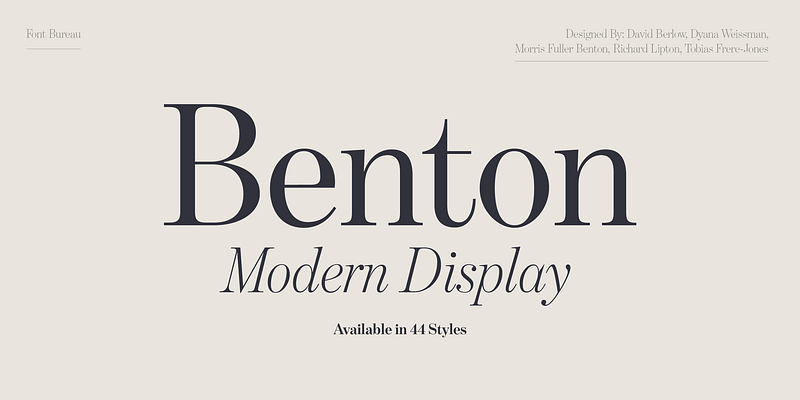
    Benton Modern - classic serif font for editorial design with attitude
    Benton Modern - classic serif font for editorial design with attitude

    A newspaper and that's exactly why it's so good

    Benton Modern was not designed to shine on Dribbble. It was built to be read. Day by day. Column by column.

    Font Bureau originally developed Benton Modern as a text font for the Boston Globe and the Detroit Free Press. Newspapers are mercilessly honest when it comes to typography. If a font doesn't work, you notice it immediately. Poor reading flow? Annoying shapes? Fatigue after a few paragraphs? Not a chance.

    The design basis is formed by Century Expanded, designed around 1900 by Morris Fuller Benton for ATF. A typeface from a time when typography was still a real craft. Proportions with meaning. Serifs with function. A calm grey tone that carries content instead of drowning it out.

    Benton Modern is a very respectful new edition of this idea. Historical at its core, technically realised in a contemporary way. It appears stable, clear and surprisingly modern – precisely because it is not orientated towards short-lived trends.

    For Editorial Design, Magazines, Blogs or extensive text sections, this is a gift. And also in the Brandingit plays to its strengths: It conveys credibility, seriousness and depth. Characteristics that sustainable and ethical brands urgently need.

    Quiet details instead of loud effects

    What makes Benton Modern special happens quietly. The font doesn't want to stand out. It wants to work.

    The Italics based on Century Schoolbook. Many people know it from school books. That's exactly why she feels so familiar. She comes across as human, approachable and honest. No academic arrogance. No typographical posturing.

    The family is completed by Display cuts, designed by Dyana Weissman and Richard Lipton. They bring a little more presence into play, but remain true to the basic approach. Ideal for headlines, quotes or editorial lead-ins. Clear. Calm. Confident.

    This restraint is a particular advantage for brands that want to communicate consciously. Benton Modern does not come between the sender and the message. It lets the content take effect.

    In practice, this means: fewer typographical corrections, less visual readjustment, more focus on the essentials. Sustainable in the best sense of the word.

    Who is behind it?

    The display sections of Benton Modern were created by Dyana Weissman and Richard Lipton developed. Both stand for functional, precise type design with attitude.

    Today the font is used by Monotype Studio is in charge. An international team with over 50 employees that supports brands worldwide in developing an independent visual voice. Since 2025 Fontworks Inc. to Monotype –, a merger that shows how strategically relevant typography has become.

    Why we love Benton Modern

    We love Benton Modern because it takes content seriously. Because it is not loud. And because it creates trust.

    For value-orientated branding, Editorial Design and well thought out Brand communication it is an excellent choice. It suits companies that think long-term. For brands that don't need to shout. And for everyone who knows that good typography is often at its best when you hardly notice it.

    Additional licence options –, for example for apps or enterprise use –, can be found on www.monotype.com/de.

    Du willst wissen, ob Benton Modern zu deiner Marke passt?

    Oder suchst eine Schrift, die deine Brand strategy, dein Corporate Design und deine Communication wirklich trägt?

    Dann lass uns drüber sprechen. Wir denken Typografie nicht isoliert, sondern als Teil eines sinnvollen Gesamtsystems. Für Marken mit Haltung. Und Rückgrat.

    Which file formats does my branding need?

    Which file formats does my branding need?

    Why there is not just one correct file

    Your logo may be the same everywhere – but the file requirements are not. After all, a social media post needs different specifications than a T-shirt print or a business card.

    Important to understand:

    • Not every file format is suitable for everything

    • Colour modes such as RGB and CMYK determine whether your design looks good on screen or in print

    • The Resolution (dpi) decides whether the whole thing is pixelated or crisp and sharp

    It sounds like nerdy stuff, but it's the be-all and end-all for a consistent – look and saves you nerves when working with print shops, service providers or online shops.

    File formats: Which for what – an overview

    In design, we basically distinguish between two file formats: Raster graphics, which consist of individual pixels, and Vector graphics, which can be scaled without loss.

    Raster formats – for photos & web graphics

    These formats consist of Pixels and are Not infinitely scalable:

    • JPG / JPEG

      • Most common format for photos

      • Compressed, therefore smaller file size

      • No transparency possible

      • Good for: Web, social media, newsletter

    • PNG

      • Supports transparency (e.g. for logos without background)

      • Compressed without loss

      • Larger than JPG

      • Good for: Websites, presentations, small printed matter

    • TIFF

      • High-quality image format without loss of quality

      • Very large file size

      • Good for: professional printing, archiving

    Vector formats – for logos, icons & printing

    These formats consist of mathematical forms and are Scalable as required – without any loss of quality:

    • SVG

      • Ideal for web and responsive designs

      • Small file size, but not printable everywhere

      • Good for: Websites, online icons, illustrations

    • EPS

      • Classic vector format for printing

      • Often required by printers

      • Good for: Posters, banners, advertising material

    • PDF

      • Universal format for print data

      • Can contain both raster and vector data

      • Good for: Print approvals, proofs, flyers, brochures

    Tip from us: Always ask your agency to a selection formats. So you are equipped for all applications – from the website to the exhibition stand.

    Colour mode: RGB vs. CMYK – Screen or print?

    Colours are not the same as colours – at least not digitally. The question is: Does the colour light up (RGB) or is it printed (CMYK)?

    RGB – for digital applications

    • Stands for Red, green, blue

    • Colour mode for Monitors, smartphones, websites

    • Bright, powerful, lively

    • Colour space is larger, but not printable

    CMYK – for printing

    • Stands for Cyan, magenta, yellow, key (black)

    • Colour mode for Print products of all kinds

    • Colours often appear duller than on the screen

    • Important for: Business cards, posters, brochures, packaging

    Important: RGB data looks great on the screen, but can be disappointing in print. Therefore, all print data must always be in CMYK converted – are ideally already before the design process, to avoid unpleasant surprises.

    Resolution: What does dpi actually mean?

    dpi = dots per inch –, i.e. how many pixels are displayed per inch. The higher the number, the sharper will be the result. But: Not everything needs 300 dpi.

    The most important dpi values at a glance:

    • 72 dpi

      • For: Web, screen, social media

      • Completely sufficient for digital display

      • Fast loading, small file size

    • 150 dpi

      • For: simple office printouts, presentations

    • 300 dpi

      • For: professional printing

      • Business cards, flyers, brochures, packaging

    • 600+ dpi

      • For: very fine prints, e.g. art prints or labels

    Fun Fact: An image with 72 dpi looks good on the screen, but pixelated and blurred in print. Conversely, a 300 dpi image is oversized for the web and results in long loading times.

    What does this mean for sustainable companies?

    Sustainability doesn't end with eco-paper – but starts with the paper itself. Clear communication of your brand. If you:

    • uses the right formats for each channel,

    • colour profiles consistently and

    • work with a smart resolution,

    ...you not only avoid mistakes, but also unnecessary reprints, Returns or hours of queries with the print shop. This saves Resources, nerves and CO₂.

    It's all a question of form(at)s

    Whether website, business card or gift box – the file must match the application. And that is precisely why it is so important to know the differences between JPG, PNG, EPS & Co. RGB vs. CMYK? dpi? Sounds technical, but it's essential for working professionally, efficiently and sustainably.

    Du willst ein Corporate Design, das nicht nur schön aussieht, sondern auch anwendbar ist?

    We can help you with:

    • Business- & Produktfotografie, which works – digital and printed

    • Farbauswahl für Deine Marke, die auch gedruckt großartig aussehen

    • Logos, die in jedem Format überzeugen

    Professional, sustainable & with attention to detail. Design that remains – and works.

    The 5 phases of the customer lifecycle - explained for sustainable companies
    The 5 phases of the customer lifecycle - explained for sustainable companies

    What is the customer lifecycle?

    Small companies that work with heart, attitude and purpose are faced with a balancing act: they want to sell – but not persuade. They want to grow – but not at the expense of people or the environment. They want to be visible – but not shout about the market. This is exactly what the Customer Lifecycle (in German: customer life cycle) is a valuable model. Not as a marketing ploy, but as a relationship compass. From initial attention to loyal fan – This is how sustainable brands accompany their customers with attitude instead of pressure. The customer lifecycle describes the entire journey that a person takes with your company – from the first contact to repurchase (and ideally beyond).

    Unlike the Customer Journey, The lifecycle starts right there, from the moment a customer makes a purchase. This is ideal for conscious brands: instead of aggressive conversion strategies, this approach focusses on sustainable customer loyalty. This is a particularly valuable model for sensitive founders, vegan brands and social enterprises.

    There are 5 phases:

    • Phases 1–3 often bring the fastest visible success.

    • Phase 4 shows how sustainable your business really is.

    All steps together form the Customer Experience – is the overall experience your customers have with your brand. Numerous touchpoints, i.e. points of contact between the customer and the brand, are created along the way.

    These touchpoints can be roughly divided into two categories:

    • Managed touchpointsContact points targeted by the company, such as online adverts, newsletters, product pages or POS displays.

    • Earned touchpointsuncontrollable but enormously influential touchpoints such as reviews, recommendations, social media mentions or viral trends from the community.

    In addition, a distinction is often made between digital and physical touchpoints – from the Instagram ad to the product packaging to the customer dialogue at the trade fair stand. Both types are crucial for brand perception – and should be strategically coordinated.

    1. attention (awareness) – Consciousness

    In this phase, a person encounters your – brand for the first time, be it through an Instagram post, a recommendation, a Google search or a visit to a trade fair. Now one thing counts above all else: Relevance. Your content must address a real need – honest, informative, likeable. Users scroll quickly and make decisions intuitively. This makes it all the more important to have a concise presence that inspires trust.

    Around 90 % of users read online reviews before they engage with a brand. That shows: Your existing customers also have an influence in the awareness phase. Use authentic testimonials, strong SEO content and social reach. Make sure you use clear language and a consistent design – it's your digital handshake.

    What does your target group need now?

    • Orientation in the chaos of offers

    • Trust that you will really understand

    • No empty marketing promises, but substance

    Here you should shine with:

    • Divi websites, that create clarity, not confusion.
    • Storytelling, that shows your attitude – not your sales targets.

    • Social media content, who doesn't want to sell himself, but touches.

    • Blog articles with real added value (no SEO grits with 27 keywords in 400 words)

    • Google & facebook Ads, that don't look like clickbait

    • Target group-orientated corporate design for a clear line

    But be careful: At this stage, you don't want to come across as a puffery, but as someone who is solving a real problem. Informative, honest, helpful – is not a polished sales pitch. Your buyer persona has a need, you (hopefully) have the solution.

    2nd comparison phase (Consideration) – Consideration

    Now it's time to get down to business: interested parties compare offers, check prices and click through product details. Perhaps your product is already in a wish list or the shopping basket has been filled – but not yet purchased. Now is the time to Building trust and Show competence. Your website should have a logical structure, load quickly and clearly display relevant information.

    With real Case Studies, product reviews or, for example, a checklist such as „What to look out for when buying“, you strengthen your position in the mind of the buyer. This determines whether your company is perceived as professional and likeable – or as interchangeable.

    What do they need now?

    • Evidence. Clarity. Real insights.

    • No high gloss, but approachability

    • The feeling: „They've thought it through.“

    What works here:

    • Clearly structured information on your website (product descriptions, references, value catalogues)

    • Testimonials, case studies, real people instead of stock photos

    • Transparency: Where do the materials come from? Who does the job?

    • CD manuals & visual clarity, that show: „We know who we are.“

    • Product pages, that answer all questions before they are asked

    Practical tip: A „Have you forgotten something?“ reminder by email is often the final nudge towards a purchase. (It also works in real life, only more subtly).

    3rd purchase phase (Purchase) – Conversion

    The decision has been made – Now nothing can go wrong. A cumbersome checkout, missing payment methods or a confusing shopping basket can lead to cancellation. Make the Purchase process as simple as possibleGuest orders, clear discount information, helpful hints and a barrier-free process are all part of this.

    The same applies here: communicate smartly! For example, use notices such as „Only 3 items left in stock“ or „€10 discount for newsletter subscriptions“. Make sure that customers are not overwhelmed by pop-ups – Authenticity comes first.

    What do they need?

    • Clarity. Overview. Options.

    • A process that feels easy – not like an obstacle course

    • A little appreciation is also welcome

    Don't mess this up:

    • WooCommerce Shops, that not only work, but also have a guided effect

    • Mobile-optimised design, especially for sensitive users who shop on the move

    • Indications of sustainable benefits (e.g. climate-neutral shipping, plastic-free packaging)

    • Newsletter incentives, but not too pushy: „If you like, stay in touch with us.“

    • Clear checkout process No pitfalls with all common payment methods (incl. Klarna, Apple Pay & Co.) and a clearly visible discount code field

    • Guest order possible? Yes please!

    • Standardised product images in XXL and with zoom

    Bonus: Offer an optional subscription model or club memberships – this creates loyalty and recurring revenue.

      4. product experience (retention) – Retention

      Now the product arrives at – and this moment decides whether a one-off purchase turns into a long-term relationship. Packaging, shipping information, additional materials: everything counts. Is the Parcel lovingly and sustainably packed? Is there a nice message, a small gift or a discount for the next order? These gestures turn a delivery into an experience.

      Customer service also plays a key role now. Are queries answered quickly and in a friendly manner? Are returns uncomplicated? All of this shows: You take your customers seriously – and this is rewarded.

      What do customers need now?

      • Orientation (parcel information, returns, contact options)

      • The feeling of not being alone with the product

      • And in the best case: small, loving surprises

      What they really appreciate here:

      • Automated, but humanly written emailsShipping, Thank you, Welcome, Updates + Tracking number

      • Short instructions or tutorials, how the product is ideally utilised

      • Give-aways or discount codes, that feel like appreciation, not like a loss leader (sticker, discount card, love letter)

      • Sustainable packaging, the posture shows – no plastic cringe

      • Return form directly in the parcel (please NO printout necessary!)

      This is where the stories that your customers tell – or not are created.

        5. brand loyalty (advocacy) – Fans

        The customer was satisfied? Then now is your chance to retain them in the long term. Surprise them with promotions for existing customers, remind them of products in their shopping basket with smart emails or offer exclusive content for club members. Particularly effective: Personalised communication – e.g. a birthday greeting or a seasonal discount campaign.

        Make sure you don't come across as overbearing in this phase either. People can sense whether you are really building a relationship – or whether you just want to force the next purchase. Fans don't stay because of discounts, but because of emotions.

        What do your customers want?

        • Not to be forgotten

        • Inspiring impulses

        • Appreciation for their loyalty

        What seems like a love letter:

        • Personalised newsletter, not just „Hello {first name}“, but really relevant

        • Reactivate inactive contacts with heart, not pressure („You haven't been here for a long time. Look what we've changed.“)

        • Birthday emails, holiday greetings, promotions for regular customers

        • Social media formats, in which customers themselves appear (e.g. reposts, community campaigns, feedback highlights)

        • Long-term content strategy, which is not sold, but accompanied

        And the best thing is: if your product is really convincing, your customers will voluntarily take over the marketing for you –. Whether via TikTok, Insta, reviews or in real life: Enthusiastic people talk.


        The lifecycle is not a tool – but an attitude

        And that's exactly why it goes so well with sustainable entrepreneurs, sing-driven projects, vegan labels, creative lone fighters and all those who prefer honest growth to aggressive scaling.

        Those who understand what makes customers tick, when they need attention and where they drop off will win in the long term. Not with discount battles. But with well thought-out, human touchpoints.

        The lifecycle is a relationship model. If you realise that your brand doesn't stand for products, but for values and attitude, then you will automatically attract people who are looking for exactly that. Not louder, but clearer. Not broader, but deeper.


        We at 2bu design help you to understand each phase of this lifecycle Visual, strategic and empathetic – with clear communication, well thought-out design and a holistic brand identity that works.

        What we can do for you, for example:

        • Strategy consulting for sensitive founders & sustainable brands
        • Emotional, well thought-out Corporate Design incl. CD manuals

        • Social Media Marketing, that communicates honestly – does not persuade

        • SEO-strong Divi websites with heart and structure

        • Customised WooCommerce shops, who sell without being annoying

        • Newsletter campaigns and lifecycle email routes

          Images for websites - between aesthetics and loading time
          Images for websites - between aesthetics and loading time

          The file format – jpeg, png or gif

          For convincing web performance, it is crucial to keep image data as slim as possible without losing impact. If you ignore this, you risk high bounce rates and wasting valuable SEO potential. But don't worry: with a few targeted measures, loading times can be minimised – without sacrificing good design.

          Images are far more than just visual decoration. They contribute to branding, control emotions – and are (correctly integrated) real conversion boosters. This makes it all the more important to understand which image formats are suitable for what and which technical settings make sense.

          The most common image formats on the web

          • JPEGIdeal for photos, good ratio between quality and file size.

          • PNGSupports transparency, better for graphics with few colours.

          • GIFOld, but still relevant for animations (e.g. in newsletters).

          JPEG (Joint Photographic Experts Group) is probably the best-known image format on the web – and for good reason: it offers high compression combined with high image quality. Colours are displayed realistically and even with a reduced file size, the image usually remains clear and rich in detail. This is why JPEG perfect for photos and images with many colour gradients.

          PNG (Portable Network Graphics) also compresses effectively, but in a different way: It reduces the number of colours used, which shrinks the file size. The more compression, the smaller the colour spectrum. The big advantage: unlike JPEG, PNG can be Display transparencies – is ideal for logos or icons that need to blend seamlessly into a background. This is why PNG is particularly popular for Graphics with few colours and transparent backgrounds.

          GIF (Graphics Interchange Format) is no longer technically up to date, but is still used for simple purposes. It can also display transparency, but is limited to only 256 colours limited to –, which can look unnatural in photos. The big plus point: GIFs can be be animated. That is why they are still popular for small animations, e.g. in newsletters, chats or as reaction graphics.

          Resolution, image size & compression – what really counts?

          The distinction between file format, image size and file size is essential for web optimisation. While the Format describes the type of file (JPEG, PNG etc.), the Image size Information about the number of pixels (e.g. 1920x1080 px) –, i.e. how large the image is displayed on the screen. The File size on the other hand, shows how much storage space an image actually needs.

          Many images that come directly from a camera are oversized. This may look stylish, but is of little technical benefit. For most websites, a maximum width of 1920 px is completely sufficient. Anyone with a higher resolution risks slow loading times – a real problem, especially on mobile devices.

          Important: Images should never be uploaded large and then scaled in the CMS. This not only has a negative effect on the display, but also unnecessarily inflates the amount of data. It is better to crop the images beforehand and optimise them specifically for the web – so that the quality remains good and the loading time short.

          Best practices for image sizes

          • Images for fullscreen header: max. 1920 x 1280 px

          • Thumbnails: 300 x 300 px

          • Blog pictures: 1200 x 800 px

          • Always: same aspect ratio (e.g. 3:2 or 4:3)

          Compression – Preserve quality, save weight

          The aim is to achieve a smart compromise between file size and image quality. The more compressed an image is, the faster the page loads – but also the higher the risk of loss of quality. Especially with small images, too much compression can quickly lead to blurring.

          With tools like Photoshop, Squoosh or TinyJPG the image quality can be reduced in a targeted manner without it being immediately visible. In Photoshop, this works very simply via „Export for Web“. Here you can set the quality (e.g. to 60 %), select the format and define the final image size.

          Important: Anyone scaling images should ensure that the Maintain aspect ratio – otherwise it will quickly become distorted. Also: Consistency is key! If you're constantly jumping between formats and aspect ratios, you'll quickly look unprofessional.

          Tools & tips for compression

          • PhotoshopExport „Save for web“

          • TinyJPG / TinyPNGfurther compression without visible loss of quality

          • Image ratio: best to keep 3:2 or 16:9

          • Beware of scaling in the CMS – better adapt beforehand!

          File names & Alt texts – The SEO boost

          Search engines cannot (yet) see what is on images. They rely on meta information – especially on the File names and the so-called Alt attribute. If you work cleverly here, you not only improve your ranking, but also make your website more accessible.

          The rules for SEO-compliant file names are simple, but are often ignored: no spaces, no umlauts, no special characters. Instead: short, clear terms with hyphens that precisely describe the image content. The alt attribute should also be filled sensibly – not only for SEO reasons, but also for users with screen readers.

          So „IMG_4589.jpg“ becomes „vegan-brunch-düsseldorf.jpg“. Sounds completely different, doesn't it?

          SEO tips for image data

          • File namesmall, with hyphens, without umlauts/special characters

          • Alt tagshort, descriptive texts („Breakfast plate with avocado“)

          • Avoidcryptic camera designations or empty alt fields

          • Also think about accessibility – Pictures are more than decoration

          Good images, short loading times – no contradiction

          If you want to be visually convincing, you don't necessarily have to put up with huge amounts of data. With the right combination of image format, resolution, compression and SEO, images can unfold their full charm – without Google or the user bouncing off. Stay flexible, keep your content technically clean and make your web presence as light as it is convincing.

          Du bist unsicher und möchtest eine professionelle Website?

          Dann ist 2bu design an deiner Seite.

          Egal ob Bildoptimierung, Divi-Websites, WooCommerce, Corporate Design oder Social Media – wir helfen Marken, ihre Botschaft klar und stark zu transportieren.

          10 ways to increase the shopping basket value of your customers

          10 ways to increase the shopping basket value of your customers

          These 10 methods will help you

          Winning new customers is not the only way to generate more sales. The best way is to retain existing customers. to leave more money when shopping in your shop. 

          The following methods help – some help quickly (1–3), others need a little setup – but then have a lasting effect (4–6) or an emotional effect (7–10):

          • 1–3: Immediately realisable & effective

          • 4–6: Combinations for medium-term success

          • 7–10: Emotion, trust & cleverness with a sustainable effect

          Those who follow these methods not only generate more sales in general, but also achieve them in less time. In addition, the costs of acquiring new customers are covered more quickly and the lifetime value, i.e. the shopping basket value until the end of the relationship with the shop, is increased.

          1. free shipping from a minimum order value

          Free shipping is one of the strongest levers for increasing the shopping basket value. Anyone who is only a few euros away from the minimum order value is happy to add an additional product to their shopping basket. A psychological hurdle is removed: „Then it's worth it.“ This works particularly well if the threshold value is slightly higher than the previous average order value.

          It is important that you actively communicate this benefit – in the header area, at checkout and in the shipping overview. This makes the incentive immediately visible. Many shops set €50 as the shipping limit – This threshold is high enough to increase sales, but low enough to seem realistic.

          Exemplary realisation:

          • Note in the shopping basket: „Only €6 until free shipping!“

          • Place the dispatch border visibly above the navigation

          • Reminder for subtotals just under the limit

          2. cross-selling: complementing matching products

          Cross-selling is about offering customers products that go well with the main product. These can be accessories, care products or stylistically appropriate additions. This method is particularly effective directly on the product page or in the checkout process – if the attention is already on the purchase.

          A prime example is net-a-porter.com: The entire outfit for the product is displayed on the item page –, including individual product suggestions that have been stylishly combined. Technical shops also use this method – for cameras, for example, which are supplemented with matching memory cards or holders.

          Concrete cross-selling examples:

          • „Goes with“ – for fashion: shoes with trousers

          • „You might also like“ – at Technik: Show accessories

          • „Often bought together“ – as a package suggestion

          3. upselling: offer higher-value variants

          Upselling means that you suggest a more expensive product with added value to your customers. This could be a premium version, a larger set or a more durable variant. It is important that the additional benefit is clearly recognisable – otherwise the offer comes across as a clumsy sales pitch.

          Many customers are happy to opt for an upgrade if it is communicated transparently. For example, the professional version with more attachments is offered instead of the standard brush. Or: a device with a larger battery, longer guarantee or more sustainable material. Higher price, clear benefits – that creates trust and sales.

          Upselling in practice:

          • Product comparison on the page: Basic vs Premium

          • „Recommended for frequent users“ or „Most frequently selected“

          • Colour highlighting of the upgrade at checkout

          4. combine bundles & quantity discount

          Bundles make products more attractive – especially if they are put together cleverly. Anyone who buys a combined package has the feeling of getting more for their money. In addition, the perceived benefit increases. A bulk discount is particularly worthwhile for recurring purchases, such as care products or food.

          For example, give 10 % on the 3-pack instead of on a single item. Or offer seasonal sets –, such as care routines or themed products. Customers like to stock up if they can save –, especially if this also helps to break the shipping limit.

          Examples of effective bundles:

          • Care set (cleansing, serum, cream) instead of individual products

          • „2+1 free“ for frequently used products

          • Gift boxes with a price advantage and emotional added value

          5. reward loyal customers

          Loyalty programmes not only increase the average order value, but also strengthen customer loyalty. Those who buy more often should also feel this –, be it through exclusive discounts, early access or small gifts. According to studies, sales among loyal customers increase by around 14 % if they are part of a loyalty programme.

          Personal examples have a particularly strong impact The Outnet I get earlier access to sales. Rewe rewards me with a voucher from the third online purchase of the month. And Payback-points with dm.de or rewe.de now trigger more than the discount itself: They bind me to the shop.

          Typical loyalty bonuses:

          • Exclusive discounts from the 3rd order

          • Points that can be redeemed for products or vouchers

          • Advance access to limited promotions

          6. personalisation in the shop experience

          A personalised shopping experience can significantly increase the shopping basket value. People who feel recognised and understood are more likely to click on recommendations and make more targeted purchases. Email reminders („You've forgotten something“) or product recommendations based on browsing behaviour work particularly well.

          Shops like yoox.com or veepee.com use personalisation effectively: at Yoox, I can see my most recent searches directly on the homepage. Veepee informs me by email about promotions for my favourite brands – with a direct calendar link. This way I don't feel like one of many, but directly addressed.

          Examples of personalisation:

          • Emails with reference to saved shopping baskets

          • Home page shows relevant brands or products

          • Personal recommendations in the footer or as a pop-up

          7. take advantage of limited discount campaigns

          Limited offers generate pressure – but in the best case positively. The appeal of „strike now“ is activated, especially with discount scales or exclusive promotions. The effect: higher-priced products are more likely to end up in the shopping basket. The purchase is planned, but emotionally charged.

          A good example is YooxThere are regular discount promotions with decreasing percentages – e.g. 40 % today, 30 % tomorrow, 10 % on the last day. This countdown ensures that many people are quick to buy – and often buy more than planned in order to get the maximum.

          Action types with boost potential:

          • „Today only: 20 % to your wish list“

          • Countdown banner on the homepage

          • „Only 2 hours left – shop now and save“

          8. use reviews as a sales booster

          Reviews have a massive influence on purchasing decisions. 90 % of customers look at reviews before making a purchase. 72 % only buy products with positive reviews. Social proof is therefore not a „nice to have“, but a real sales driver – and can also increase the shopping basket value.

          People invest more when they feel secure. Studies also show this: 31 % spend more if the company has been rated as „excellent“. And 88 % trust online reviews almost as much as the advice of a friend. Reviews provide orientation – and the necessary security for larger orders.

          Tactics for review utilisation:

          • Rating with photo or comment visible on the product

          • „Verified purchase“ for more credibility

          • Note: „This product has 4.9 out of 5 stars“

          9. enclose small gifts or vouchers

          An unexpected gift will be remembered. Whether it's a personalised voucher or a little extra – such gestures have a strong emotional impact. People who feel valued are more likely to return and spend more next time. The important thing is: it shouldn't feel like a mass discount.

          With matchesfashion.com For example, a high-quality, unobtrusively branded box is always included – I have ordered several times for this reason alone. Vouchers with an expiry date in the package are also effective: they increase the repurchase rate and invite you to pass the voucher on to a friend.

          Favourite extras in the package:

          • 10 % voucher with expiry date

          • Free sample or mini product

          • High-quality packaging that is reused

          10. make returns simple and fair

          Customers are more likely to decide in favour of a purchase if they know: Returning goods is not a problem. An uncomplicated returns policy lowers the inhibition threshold –, especially for clothing, technology or higher-priced products. 73 % of people say that their return experience influences whether they buy again.

          I myself avoid shops where I have to laboriously print out returns or send back products in their original packaging. With Veepee z.For example, I have already cancelled purchases because of such experiences. Making returns easy increases the likelihood of more courageous and larger purchases.

          Tips for easy returns:

          • Enclose the return label in the parcel

          • Clear communication in the footer and checkout

          • „Visibly place “No risk – 30 days free return"

          Increasing shopping basket value does not mean persuading

          With relevant recommendations, clear benefits and honest communication, trust is created. And this is exactly what makes people willing to invest more – in products, in relationships and in your shop. Now it's up to you to combine the right strategies and implement them in your style.

          Du möchtest deine Produkte verkaufen, aber dabei nicht aufdringlich sein?

          Wenn du deinen Warenkorbwert nachhaltig steigern willst, brauchst du keine lauten Verkaufstricks, sondern klare Strategie, ehrliche Kommunikation und ein starkes Branding. Genau da kommen wir ins Spiel.

          Lass uns gemeinsam herausfinden, welche Upselling- und Cross-Selling-Strategien wirklich zu deiner Marke passen – und sich für deine KundInnen gut anfühlen.